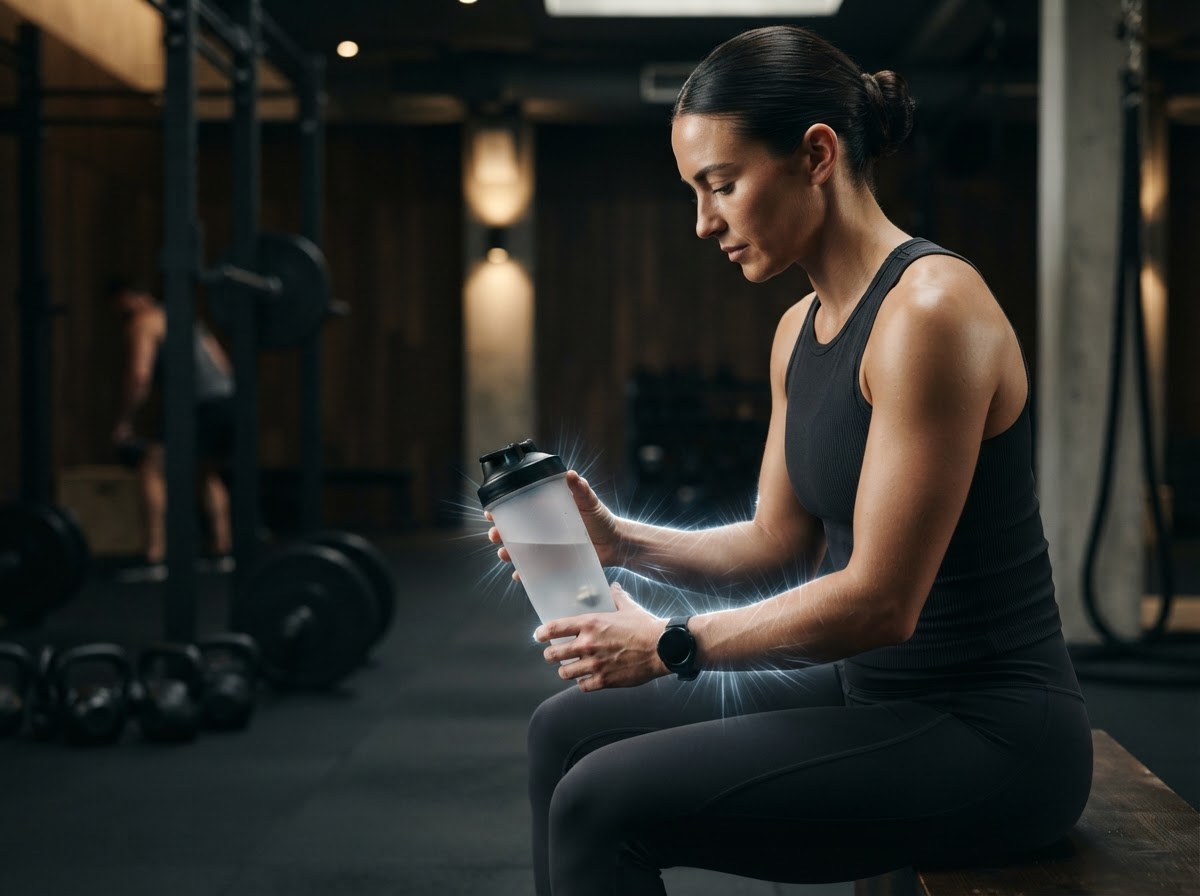
If you've ever taken a scoop of pre-workout and suddenly felt your face, hands, ears or skin start tingling, there is a good chance beta-alanine was responsible. The feeling can range from light pins and needles, itching, prickling, warmth, skin crawling, to a stronger burning or tingling sensation. The technical term is paresthesia. It is one of the best-known effects of beta-alanine.
Some people barely notice it. Others find it extremely distracting. And because so many pre-workout formulas contain beta-alanine, there is a persistent myth that the tingling means your pre-workout has "kicked in." That isn't what the sensation means. Beta-alanine can be an effective sports-nutrition ingredient in appropriate contexts, but its established performance strategy depends on increasing muscle carnosine over time — not on whether your skin tingles after a single scoop. Here's what is actually happening.
Quick Answer: Why Does Beta-Alanine Make You Tingle?
Beta-alanine can cause a temporary tingling, itching or pins-and-needles sensation known as paresthesia. The sensation appears to occur because beta-alanine activates sensory nerve pathways in the skin, with research implicating the peripheral neuronal receptor MrgprD. The effect is more likely or more noticeable when beta-alanine reaches a high concentration in the blood quickly, such as after a larger immediate-release dose.
The tingling:
- Does not mean the supplement is "working better"
- Is not required for beta-alanine to increase muscle carnosine
- Is typically temporary
- Can often be reduced by smaller divided doses or sustained-release formulations
NIH consumer guidance notes that doses around 800 mg or more can produce paresthesia in some people and that the sensation may last roughly 60–90 minutes. Individual response varies substantially.
Key Takeaways
- Beta-alanine tingling is called paresthesia.
- It can feel like tingling, itching, prickling, warmth or pins and needles.
- It commonly affects the face, neck, hands or upper body.
- Larger rapidly absorbed doses are more likely to produce it.
- Tingling does NOT mean beta-alanine is working better.
- Beta-alanine's established sports-nutrition effect comes from increasing muscle carnosine over time.
- Divided doses can reduce paresthesia.
- Sustained-release beta-alanine may reduce paresthesia.
- Beta-alanine generally needs to be taken consistently over multiple weeks rather than functioning as an immediate pre-workout switch.
- LactiGo is not beta-alanine; it uses a topical carnosine-based approach, but the two approaches should not be described as physiologically equivalent.
What Is Beta-Alanine Paresthesia?
Paresthesia is a sensation involving abnormal skin feelings such as tingling, pins and needles, prickling, itching, mild burning or crawling sensations. Beta-alanine can trigger this sensation after oral ingestion. A 2019 systematic risk assessment covering more than 100 human beta-alanine studies identified paresthesia as the primary repeatedly reported side effect associated with supplementation. The sensation appears to be dose-related and particularly associated with how quickly beta-alanine concentration rises in the blood.
Source: Dolan E et al. A Systematic Risk Assessment and Meta-Analysis on the Use of Oral β-Alanine Supplementation. Advances in Nutrition. 2019. PMID 30980076.
Why Does Beta-Alanine Make Your Skin Tingle?
The tingling does not appear to come from histamine in the same way that a typical allergic itch does. Research instead points toward a neural mechanism. Beta-alanine can interact with sensory nerve receptors located in the skin. One receptor strongly implicated is MrgprD, or Mas-related G-protein coupled receptor D. Activation of these sensory neurons can produce the characteristic tingling, itching and prickling associated with beta-alanine. The 2019 risk assessment describes beta-alanine paresthesia as occurring through a histamine-independent neural pathway.
That matters because the sensation should not automatically be interpreted in the same way as a histamine-driven allergic reaction. However, do NOT tell users to ignore symptoms such as hives, swelling, difficulty breathing, severe rash or other symptoms suggesting a potentially serious reaction. Those are not the ordinary beta-alanine tingles this article is describing.
Normal beta-alanine tingling vs. concerning symptoms
Temporary pins-and-needles or itching shortly after beta-alanine is a known effect called paresthesia. Hives, facial or throat swelling, difficulty breathing, severe rash or other concerning symptoms are not something to dismiss as "just beta-alanine tingles" and warrant appropriate medical attention.
Where Do Beta-Alanine Tingles Usually Happen?
Commonly described areas include:
- Face
- Neck
- Ears
- Hands
- Back of the hands
- Arms
- Upper trunk
The sensation can vary dramatically between individuals. Two people taking the same amount can experience very different levels of tingling. Factors may include dose, formulation, speed of absorption, body size, individual sensitivity, whether the dose is divided and whether the formulation is sustained-release. Do not tell readers there is one exact dose that guarantees tingling.
How Quickly Does Beta-Alanine Tingling Start?
Research has reported paresthesia appearing fairly quickly after ingestion. The 2019 risk assessment describes symptoms occurring within roughly 10–20 minutes in some acute beta-alanine research. This makes sense because paresthesia intensity appears closely related to peak blood beta-alanine concentration and how rapidly that peak is reached. Someone consuming a relatively large immediate-release amount may therefore notice tingling much more than someone consuming a smaller divided or sustained-release dose.
How Long Does Beta-Alanine Tingling Last?
Duration varies. NIH Office of Dietary Supplements guidance notes that paresthesia associated with beta-alanine can last approximately 60–90 minutes in some users. The feeling generally declines as the acute beta-alanine concentration falls. Do not promise every person's tingling will disappear within exactly 60 minutes. Individual responses vary.
Source: National Institutes of Health Office of Dietary Supplements. Dietary Supplements for Exercise and Athletic Performance.
Does Beta-Alanine Tingling Mean It's Working?
No. This is one of the most important misconceptions to correct. The tingling sensation is not a performance meter. Feeling stronger tingles does NOT mean more carnosine was created, your muscles are better buffered, your pre-workout is stronger, your workout will be better, or beta-alanine is "kicking in" more effectively. Paresthesia reflects acute sensory nerve stimulation. Beta-alanine's primary sports-nutrition rationale is very different. The body uses beta-alanine to synthesize carnosine. Carnosine accumulates inside skeletal muscle over time. That chronic change — not the skin sensation — is the reason beta-alanine has been studied as an ergogenic aid.
What Does Beta-Alanine Actually Do?
Beta-alanine is a nonessential amino acid. Inside the body, beta-alanine combines with histidine to produce carnosine. Carnosine exists in relatively high concentrations in skeletal muscle and has several proposed physiological roles. One of its best-known roles in exercise physiology is intracellular pH buffering. During high-intensity exercise, muscle chemistry changes rapidly. Carnosine can accept hydrogen ions and contribute to the muscle's ability to resist rapid changes in pH. This is why researchers have investigated beta-alanine for high-intensity exercise performance.
How Long Does Beta-Alanine Take to Work?
Beta-alanine is not primarily an acute supplement. That means the established strategy is NOT: take beta-alanine 20 minutes before exercise → feel tingles → instant performance improvement. Instead, beta-alanine is typically used consistently over time. The International Society of Sports Nutrition position stand reports that approximately 4–6 grams per day for at least 2–4 weeks has been shown to increase muscle carnosine and improve certain exercise-performance outcomes. NIH guidance similarly describes divided daily loading protocols and notes that benefits can increase after several weeks as muscle carnosine concentrations rise.
Source: Trexler ET et al. International Society of Sports Nutrition position stand: Beta-Alanine. Journal of the International Society of Sports Nutrition. 2015. PMID 26175657.
Do NOT convert these research ranges into individualized dosing advice. This article is explaining research protocols, not prescribing supplements.
Why Is Beta-Alanine Put in Pre-Workout Then?
There are several reasons. Beta-alanine is a legitimate sports-nutrition ingredient with a substantial research history. Pre-workout formulas are also an easy way for consumers to take it consistently. But the fact that beta-alanine is included in a pre-workout does NOT mean it works primarily through acute timing. For beta-alanine, daily total intake and consistent use over time matter more than feeling tingles immediately before one workout. This creates an interesting marketing problem. The tingling is immediate, noticeable and memorable, while muscle carnosine loading is gradual, invisible and dependent on consistency. So consumers sometimes interpret the noticeable side effect as proof of immediate effectiveness. That is not scientifically justified.
Is Beta-Alanine Tingling Dangerous?
For otherwise healthy participants consuming beta-alanine within commonly studied research protocols, paresthesia is generally described as temporary and not considered harmful. A 2019 systematic risk assessment covering 101 human studies and 50 animal studies found paresthesia to be the primary reported side effect in human supplementation studies. The review found no evidence that the ordinary paresthesia itself caused harmful consequences. However, that does NOT mean every supplement is appropriate for every individual. And it does not mean unusual symptoms should automatically be written off as paresthesia. Also avoid making sweeping claims about indefinite long-term use because long-term safety data are not unlimited.
How Common Is Beta-Alanine Tingling?
Frequency varies substantially depending on the study and dosing method. In the high-quality studies analyzed by the 2019 risk assessment, approximately 18.6% of participants receiving beta-alanine reported paresthesia compared with 5.7% receiving placebo. The estimated odds of reporting paresthesia were substantially higher with beta-alanine. However, this should NOT be interpreted as saying only 18.6% of all real-world users will ever experience tingling. Different doses, formulations, reporting methods and populations produce different rates. Use those numbers only in the context of that analysis.
Does More Beta-Alanine Cause More Tingling?
Generally, larger rapidly absorbed doses are more likely to produce noticeable paresthesia. The 2019 review describes acute evidence showing approximately 0.8 g produced relatively mild sensations in some protocols, while approximately 1.6 g could produce more noticeable effects, and approximately 3.2 g taken as a large immediate amount produced unpleasant sensations in study participants. Do NOT turn this into exact universal thresholds. Body size, formulation and individual sensitivity matter. NIH consumer guidance notes that beta-alanine doses of around 800 mg or more can produce moderate to severe paresthesia in some users. The useful takeaway is: a large amount all at once is more likely to produce noticeable tingling than a smaller or slower-release amount.
How Can You Reduce Beta-Alanine Tingling?
If someone wants the beta-alanine strategy but dislikes paresthesia, research supports several practical approaches.
1. Divide the Daily Amount Into Smaller Doses
Instead of consuming one large bolus, dividing beta-alanine across the day can reduce how high blood beta-alanine concentration spikes. Lower peaks can reduce paresthesia.
2. Use a Sustained-Release Formulation
Sustained-release beta-alanine is designed to enter circulation more gradually. Research comparing rapid- and sustained-release formulations has reported less paresthesia with slower-release approaches.
3. Avoid Treating Tingling as the Goal
You do NOT need to chase the sensation. If a lower or slower dose produces little or no tingling, that does not mean beta-alanine stopped contributing to a loading protocol.
4. Look at the Total Daily Strategy
If beta-alanine is being used to increase muscle carnosine, the bigger question is: are you consuming an appropriate amount consistently over time? — not: did your ears tingle today? Do NOT tell readers to exceed product-label directions.
Can You Stop the Tingles Once They Start?
Ordinary beta-alanine paresthesia is usually temporary. Once the acute sensation begins, it generally declines as blood beta-alanine levels fall. Do not recommend unproven remedies. Do NOT tell readers to take antihistamines specifically to stop beta-alanine tingling, apply random medications, or take additional supplements to "neutralize" it. Because the mechanism appears to be histamine-independent, antihistamines are not an obvious solution to normal beta-alanine paresthesia. For future doses, changing dose size, dose distribution or release formulation is a more evidence-based strategy for reducing the sensation.
Why Doesn't Everyone Get Beta-Alanine Tingles?
Individual sensitivity differs. Research suggests paresthesia varies between people even when dosing is similar. Possible influences include body size, peak blood concentration, absorption rate, formulation and individual sensory sensitivity. The absence of tingling does not mean: "Beta-alanine doesn't work on me." Likewise, severe tingling does not mean: "I respond extremely well to beta-alanine." The sensation and the chronic muscle-carnosine response should not be treated as the same thing.
What If You Hate Beta-Alanine Tingles?
There are two separate questions to ask.
Question 1: Do you still want to use beta-alanine?
If yes, dividing doses or using a sustained-release formulation may substantially reduce paresthesia while still allowing you to follow a chronic beta-alanine strategy.
Question 2: Are you actually looking for the carnosine/performance concept rather than beta-alanine specifically?
That opens a different discussion. Beta-alanine is used largely because the body uses it to produce carnosine. There are now other carnosine-related performance approaches being studied, including topical carnosine. But these strategies are NOT yet scientifically interchangeable. For the complete comparison, read our LactiGo vs Beta-Alanine breakdown.
What Is Carnosine?
Carnosine is a naturally occurring dipeptide made from beta-alanine and histidine. It exists in skeletal muscle and has several physiological roles. In sports nutrition, one of the most discussed is intracellular buffering. Consistent beta-alanine supplementation can increase muscle carnosine. That relationship is well established. But another approach now being investigated involves applying carnosine itself: topically. For the full explanation, read our Topical Carnosine: What It Is & What the Research Says guide.
What Is Topical Carnosine?
Topical carnosine products contain carnosine in a formulation applied to the skin rather than taken orally. One obvious practical distinction is: there is no oral beta-alanine dose. Therefore the product is not expected to create beta-alanine-induced paresthesia through oral beta-alanine exposure. However, do NOT write: "Topical carnosine has no sensations." Some formulations contain ingredients such as menthol that can produce their own cooling or skin sensations. And do NOT write: "Topical carnosine gives all the benefits of beta-alanine without tingles." That has NOT been established. The direct evidence base for topical carnosine is much smaller than the evidence base for chronic beta-alanine supplementation.
Affiliate disclosure: Fast Gel is an independent LactiGo affiliate. We may earn a commission if you purchase LactiGo through links on this page, at no additional cost to you. LactiGo and beta-alanine use different delivery approaches and should not be treated as scientifically interchangeable.
Don't Love the Beta-Alanine Routine?
LactiGo takes a different approach: it uses a topical carnosine-based formula applied around activity rather than an oral beta-alanine loading protocol.
What Is LactiGo?
LactiGo is a topical carnosine-based performance and recovery product. The current regular LactiGo ingredient list includes: water, glycerin, carnosine, magnesium sulfate, ethoxydiglycol, phenoxyethanol, xanthan gum, caprylyl glycol and sorbic acid.
Current LactiGo active-lifestyle instructions recommend:
- Start with clean, dry skin
- Apply enough product to cover the desired area
- Massage until absorbed
- For pre-activity use, apply approximately 30–45 minutes before exercise
LactiGo should not be described as "topical beta-alanine." It contains carnosine rather than beta-alanine. For full directions, read our How to Use LactiGo guide.
Does LactiGo Cause Beta-Alanine Tingles?
No oral beta-alanine is listed in the current regular LactiGo formulation, so the classic beta-alanine paresthesia mechanism discussed in this article is not the same issue. However, do NOT promise: "LactiGo cannot cause any skin sensation." LactiGo also sells a menthol formulation. The current U.S. DailyMed label for LactiGo with Menthol identifies menthol 1.5% as the active OTC ingredient. Menthol itself can create a noticeable cooling sensation. Therefore the accurate statement is: LactiGo does not use beta-alanine as its primary ingredient, so it is not expected to cause beta-alanine-induced paresthesia through an oral beta-alanine dose. Different LactiGo formulas can still produce their own normal topical sensations, particularly menthol-containing versions.
Source: DailyMed. LactiGo with Menthol Performance & Recovery Gel. NDC 72481-102. Label revised March 25, 2026.
Does Topical Carnosine Actually Work?
The evidence is still developing. This section must be balanced. A 2025 peer-reviewed study involving seven world-class male rugby sevens players tested topical carnosine gel against placebo. The athletes applied 10 mL approximately 40 minutes before 12 intermittent cycling sprints. Peak power was significantly higher in the topical carnosine condition during Sprint 2, Sprint 4 and Sprint 7. However, there was no treatment effect for mean power, heart rate or perceived exertion.
Source: Beaven CM, James C, McMaster DT, Brockelbank N. Topical carnosine gel improves intermittent high-intensity exercise performance in world-class rugby sevens players. Journal of the International Society of Sports Nutrition. 2025. PMID 40859880.
For the full breakdown, read our Does LactiGo Work? article.
Is All Topical Carnosine Research Positive?
No. This section is important for credibility. Not every topical-carnosine study has reported improved performance. A 2025 study involving trained cyclists evaluated transdermal carnosine and transdermal bicarbonate during high-intensity cycling intervals and a time-trial protocol. The researchers did not find a significant performance benefit from either topical condition compared with placebo under the conditions tested. Another 2025 university thesis examining 1,500-meter rowing performance also did not find a significant performance effect from topical carnosine in experienced club-level rowers.
Therefore, do NOT describe topical carnosine as having universally positive research. The current evidence is mixed and still emerging. Different populations, exercise protocols, formulations and application procedures may matter. This is exactly why the Fast-Gel content should remain careful and transparent.
Source: An Inconvenient Truth: Transdermal Buffering Lotions Appear to Offer No Significant Performance Improvement. Physiologia. 2025;5(3):35. Also: Investigating the effect of a topical carnosine gel on 1,500 m rowing performance in experienced club-level rowers. University of Waikato. 2025. (A thesis is not equivalent in evidentiary weight to a peer-reviewed randomized trial; it is included only as supporting evidence that the literature is not uniformly positive.)
So Is LactiGo a Replacement for Beta-Alanine?
Not in the strict scientific sense. Beta-alanine has a much larger research base, established evidence for increasing muscle carnosine, multiple systematic reviews, meta-analyses and well-established chronic supplementation protocols. Topical carnosine currently has much less direct human research, some positive performance findings, some null performance findings and unresolved mechanistic questions. Therefore, do NOT write: "LactiGo replaces beta-alanine." A more accurate statement is: LactiGo represents a different carnosine-related performance approach for people interested in a topical product rather than a traditional oral beta-alanine loading routine.
Interested in the Topical Approach?
Compare the research, routine and practical differences between LactiGo and beta-alanine before deciding which approach fits you.
Does Beta-Alanine Tingling Mean Your Pre-Workout Is Strong?
No. This deserves its own section because the misconception is widespread. A dramatic tingling sensation tells you: beta-alanine reached sensory nerve pathways. It does NOT tell you how much caffeine is present, whether other ingredients are effective, whether beta-alanine has been properly loaded, whether muscle carnosine is elevated, whether today's workout will be better, or whether the product is "high quality." A pre-workout can produce strong paresthesia and still contain a beta-alanine dose that does not match a chronic research protocol. Conversely, a person using a sustained-release beta-alanine supplement may feel almost no tingling while still following a valid loading protocol.
Why Do Companies Put Enough Beta-Alanine in Pre-Workout to Make You Tingle?
Avoid accusing manufacturers of deliberately doing this solely for marketing unless there is direct evidence. Instead explain: beta-alanine is a legitimate ingredient. The acute tingling is simply much easier for consumers to notice than the gradual physiological adaptation associated with muscle-carnosine loading. That can lead consumers to associate "I can feel it" with "It is working." But those are not necessarily the same thing.
Should You Avoid Beta-Alanine Because of the Tingles?
Not necessarily. If the ordinary temporary paresthesia does not bother someone and beta-alanine fits their nutrition/training strategy, tingling alone is not generally considered evidence that the supplement is harmful. If the sensation is unpleasant, smaller divided doses may help, sustained-release formulations may help, and following the product label rather than taking one large amount may help. People should make supplement decisions based on evidence, their goals, tolerance, overall diet, training and relevant health considerations — rather than simply whether they enjoy or dislike the tingling sensation.
Can You Build Muscle Carnosine Without Feeling Tingling?
Yes. The tingling itself is not required. Strategies that reduce rapid blood beta-alanine spikes can reduce paresthesia while still allowing beta-alanine to be consumed consistently. Sustained-release and divided-dose strategies exist specifically for this reason. Again: no tingling does not mean no effect.
Is Beta-Alanine Worth Taking?
That depends on the type of exercise and the athlete. Beta-alanine's research tends to be most relevant to demanding high-intensity exercise where intracellular buffering may matter. The evidence does NOT support telling every bodybuilder, runner, cyclist, powerlifter or recreational exerciser that beta-alanine will automatically improve every outcome. If someone wants beta-alanine's established chronic muscle-carnosine strategy and tolerates it well, it remains one of the better-studied sports supplements. If someone dislikes daily oral supplementation, pre-workout powders, paresthesia or traditional loading routines, they may also be interested in learning about other approaches. That is where topical carnosine becomes relevant as an emerging — not equivalent — option.
Prefer Something Topical?
Learn how topical carnosine differs from beta-alanine and what the current human research actually shows.
Bottom Line: Why Does Beta-Alanine Make You Tingle?
Beta-alanine tingling is called paresthesia. It is a temporary sensory effect associated with beta-alanine's interaction with nerve pathways in the skin. It tends to be more noticeable when a relatively large amount is taken at once, the formulation absorbs rapidly, or blood beta-alanine concentration rises quickly. The most important thing to understand is: tingling does not mean beta-alanine is working. Beta-alanine's established sports-nutrition benefit comes from increasing skeletal-muscle carnosine over time. That typically requires consistent supplementation over several weeks.
If you want beta-alanine but dislike the sensation, divided doses and sustained-release formulations can reduce paresthesia. If what interests you more broadly is carnosine and muscle buffering, there are also newer approaches being investigated, including topical carnosine. LactiGo uses a topical carnosine-based formula rather than beta-alanine. The evidence supporting topical carnosine is much newer and mixed, so LactiGo should not be presented as a scientifically identical replacement for beta-alanine. But for someone specifically interested in a topical carnosine product rather than another oral loading routine, it is an option worth researching.
Explore LactiGo
See current LactiGo formulas, learn how the topical carnosine approach works and decide whether it fits your training routine.
Purchases through Fast Gel may earn us a commission at no additional cost to you.
Frequently Asked Questions About Beta-Alanine Tingling
Sources & Further Reading
- Dolan E et al. A Systematic Risk Assessment and Meta-Analysis on the Use of Oral β-Alanine Supplementation. Advances in Nutrition. 2019;10(3):452–463. DOI: 10.1093/advances/nmy115. PMID: 30980076.
- Trexler ET et al. International Society of Sports Nutrition position stand: Beta-Alanine. Journal of the International Society of Sports Nutrition. 2015;12:30. PMID: 26175657.
- National Institutes of Health Office of Dietary Supplements. Dietary Supplements for Exercise and Athletic Performance — Consumer Fact Sheet. Link.
- National Institutes of Health Office of Dietary Supplements. Dietary Supplements for Exercise and Athletic Performance — Health Professional Fact Sheet. Link.
- Beaven CM, James C, McMaster DT, Brockelbank N. Topical carnosine gel improves intermittent high-intensity exercise performance in world-class rugby sevens players. Journal of the International Society of Sports Nutrition. 2025;22(1):2550311. DOI: 10.1080/15502783.2025.2550311. PMID: 40859880.
- An Inconvenient Truth: Transdermal Buffering Lotions Appear to Offer No Significant Performance Improvement. Physiologia. 2025;5(3):35. DOI: 10.3390/physiologia5030035.
- Investigating the effect of a topical carnosine gel on 1,500 m rowing performance in experienced club-level rowers. University of Waikato. 2025.
- U.S. National Library of Medicine. DailyMed. LactiGo with Menthol Performance & Recovery Gel. NDC 72481-102. Label revised March 25, 2026. Link.
- Current official LactiGo Regular Topical Sports Hydration Gel product directions. Current active-lifestyle instructions recommend application approximately 30–45 minutes before activity.
Keep Reading
LactiGo vs Beta-Alanine: Topical Carnosine vs Oral Loading
Compare the research, routine and practical differences between the two approaches.
Topical Carnosine: What It Is & What the Research Says
Learn what carnosine does in skeletal muscle and what human research has found.
Does LactiGo Work? What the Research Actually Says
A closer look at the published topical carnosine research and its limitations.
Why Do Muscles Burn During Exercise?
The science behind the burning sensation during hard exercise.
How to Use LactiGo
Learn exactly when, where and how to apply LactiGo.