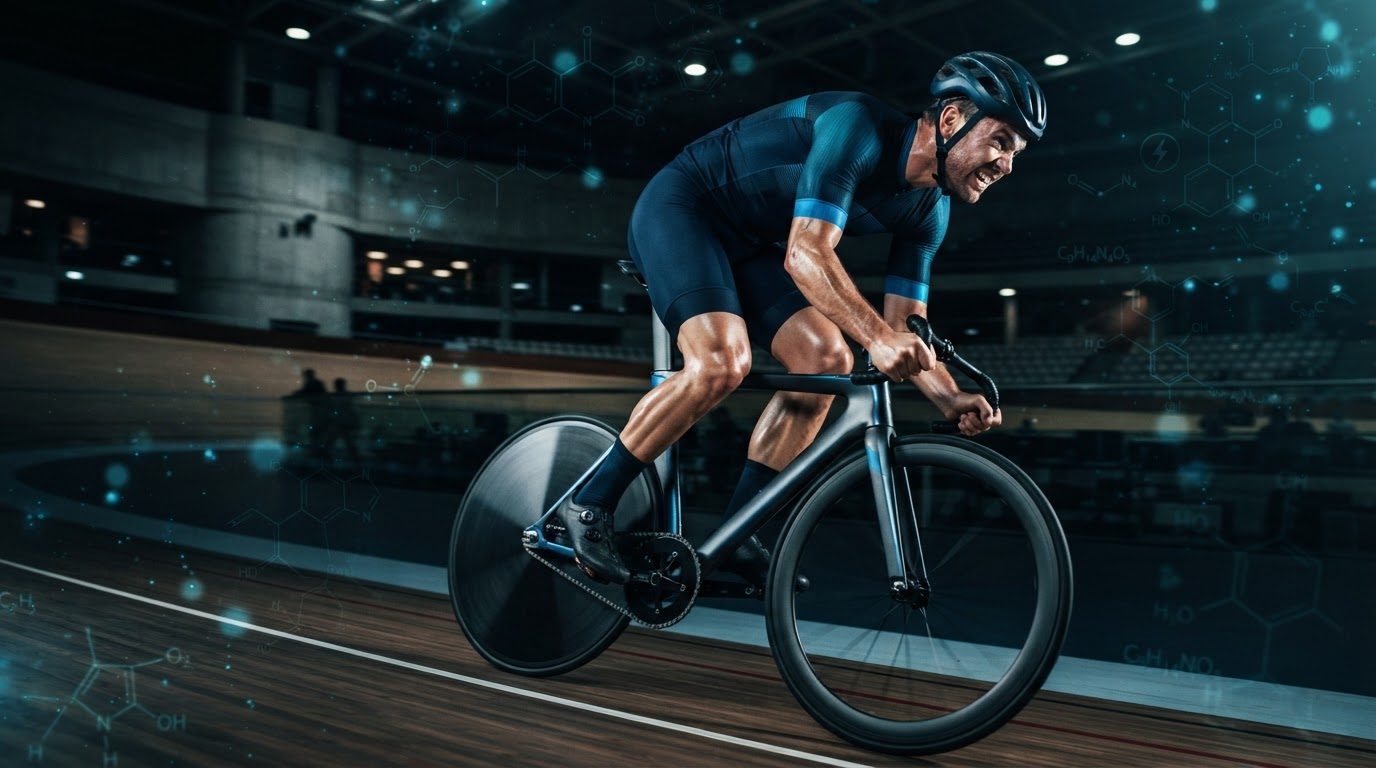
Carnosine is one of those compounds many athletes first hear about while researching another supplement: beta-alanine. That is because beta-alanine's sports-nutrition value comes largely from what your body does with it. Beta-alanine combines with histidine to form carnosine. Carnosine is stored at relatively high concentrations in skeletal muscle and performs several physiological roles.
Its best-known exercise-related role is intracellular pH buffering. Researchers have also investigated carnosine's involvement in calcium handling, muscle contraction, reactive-species scavenging and muscle-cell function. But biological plausibility and proven performance benefits are not the same thing. This guide separates what carnosine clearly does from what still needs more research.
Quick Answer: What Are the Main Benefits of Carnosine?
Carnosine is a naturally occurring dipeptide made from beta-alanine + histidine and is found in particularly high concentrations in skeletal muscle. Its most established exercise-related function is helping buffer changes in muscle pH during hard exercise. Carnosine may also influence calcium handling, muscle contraction and reactive-species activity.
The strongest practical sports-nutrition evidence comes from studies showing that chronic beta-alanine supplementation increases skeletal-muscle carnosine and can improve some high-intensity exercise outcomes. Newer research is also examining oral carnosine and topical carnosine, but those approaches have smaller evidence bases.
Key Takeaways
- Carnosine is made from beta-alanine and histidine.
- It is naturally abundant in skeletal muscle.
- It contributes to intracellular pH buffering.
- Beta-alanine reliably raises muscle carnosine over time.
- Higher muscle carnosine does not guarantee improvement in every sport or exercise test.
- Oral carnosine has less sports-performance research than beta-alanine.
- A 2026 randomized oral-carnosine trial found improvements in selected endurance measures, but not every outcome.
- Topical carnosine is an emerging research area.
- LactiGo was the topical carnosine gel identified in a 2025 elite-rugby repeated-sprint study.
- Topical application has not yet been proven to increase intramuscular carnosine.
What Is Carnosine?
Carnosine is a dipeptide made from beta-alanine and histidine. Its chemical name is β-alanyl-L-histidine. Carnosine occurs in multiple tissues, including skeletal muscle, brain and heart. For exercise science, skeletal muscle receives most of the attention.
Muscle contains relatively high carnosine concentrations, especially in fast-twitch fibers. These fibers are heavily involved in sprinting, jumping, explosive exercise and high-intensity resistance training.
Source: Boldyrev AA, Aldini G, Derave W. Physiology and pathophysiology of carnosine. Physiological Reviews. 2013. PMID 24137022.
Benefit #1: Muscle pH Buffering
This is carnosine's most widely discussed role in exercise. During hard exercise, working muscle undergoes rapid metabolic changes. Hydrogen-ion concentration can rise. As hydrogen-ion concentration increases, pH falls. Carnosine can accept hydrogen ions and contributes to the muscle's intracellular buffering capacity. This helps resist rapid changes in pH during demanding muscular work.
Do NOT simplify this into "carnosine removes lactic acid." That is inaccurate. Lactate is not simply toxic waste, and exercise fatigue is multifactorial. For the full picture, read our Why Do Muscles Burn During Exercise? article.
Source: Sale C et al. Carnosine: from exercise performance to health. Amino Acids. 2013. PMID 23479117.
Benefit #2: Possible Effects on Calcium Handling and Contraction
Muscle contraction depends heavily on calcium. Research suggests carnosine may influence calcium sensitivity, excitation-contraction processes and myofilament function. This means carnosine may affect muscle physiology through more than buffering alone.
However, keep this appropriately qualified. Research suggests carnosine may influence these processes — it has been proposed, not proven as a strength mechanism. Do NOT say "carnosine is proven to increase strength by improving calcium release."
Source: Saunders B et al. The Physiological Roles of Carnosine and β-Alanine in Exercising Human Skeletal Muscle. Medicine & Science in Sports & Exercise. 2019. PMID 31083045.
Benefit #3: Antioxidant and Reactive-Species Activity
Experimental research shows that carnosine can interact with reactive oxygen species, reactive aldehydes and lipid-peroxidation products. These effects are biologically interesting. But do NOT turn them into unsupported statements such as "carnosine prevents aging," "carnosine prevents cancer" or "carnosine detoxifies the body." Broader therapeutic research remains mixed and often preclinical. Fast-Gel keeps the focus on exercise and muscle physiology.
Benefit #4: Increasing Muscle Carnosine Can Help Some High-Intensity Exercise
This is where beta-alanine becomes important. Beta-alanine availability limits muscle-carnosine synthesis. Chronic beta-alanine supplementation can therefore increase skeletal-muscle carnosine. A large body of research supports this effect.
Source: Perim P et al. The Muscle Carnosine Response to Beta-Alanine Supplementation. Frontiers in Physiology. 2020. PMCID PMC7456894.
However, higher muscle carnosine does NOT automatically improve every performance test. Exercise effects depend on duration, intensity, population, exercise mode and the outcome measured.
Does More Muscle Carnosine Always Improve Performance?
No. A 2026 systematic review and multilevel meta-analysis examined beta-alanine and repeated-sprint ability. It included 17 randomized controlled trials. The analysis found no clear overall improvement in mean repeated-sprint performance, peak repeated-sprint performance, or fatigue decrement.
Source: No ergogenic effect of β-alanine on repeated sprint ability: a systematic review and multilevel meta-analysis of randomized controlled trials. 2026. PMID 41971372.
This does NOT mean carnosine is irrelevant. It means the performance effect depends strongly on the exercise context.
Why Do Athletes Use Beta-Alanine?
Beta-alanine is the most established sports-nutrition method for increasing muscle carnosine. The body uses beta-alanine + histidine to make carnosine. Research protocols often use beta-alanine consistently for multiple weeks. Do NOT present this as an acute "take it 20 minutes before exercise" mechanism. The effect depends on accumulation over time.
For the full comparison, read our LactiGo vs Beta-Alanine breakdown.
Why Does Beta-Alanine Cause Tingling?
Beta-alanine can cause paresthesia, which may feel like tingling, itching or pins and needles. This sensation is not evidence that beta-alanine is working better. The relevant exercise strategy is the gradual rise in muscle carnosine. For the complete explanation, read our Why Does Beta-Alanine Make You Tingle? article.
Benefit #5: Carnosine May Be Particularly Relevant to High-Intensity Exercise
Carnosine buffering becomes especially interesting when exercise intensity is high, glycolytic energy turnover is substantial, muscle pH changes rapidly, and work continues long enough for buffering capacity to matter. Examples include high-intensity intervals, cycling, rowing, combat sports, team-sport efforts and high-repetition resistance training. Do NOT imply every activity listed has direct proof from every carnosine intervention.
Does Carnosine Improve Endurance?
This depends on what type of endurance is being discussed. A notable randomized placebo-controlled human study published in 2026 examined oral carnosine. The trial included 299 participants. Participants received placebo or carnosine-containing capsules. The carnosine intervention supplied approximately 2 grams per day for up to around 12 weeks.
Researchers measured hand-grip strength, calf raises, two-minute step performance and gait speed. The results were selective. At about six weeks, participants younger than 40 receiving carnosine showed a significant improvement in calf raises. At about 12 weeks, men older than 40 showed a significant increase in the two-minute step-test measure. Not every outcome improved.
Therefore do NOT say "carnosine improves endurance for everyone." A better interpretation is: direct oral carnosine may affect selected muscular or cardiorespiratory endurance outcomes in some populations, but the evidence remains developing.
Source: O'Toole TE et al. Effects of carnosine supplementation on physical endurance: a placebo-controlled randomized clinical trial. Journal of the International Society of Sports Nutrition. 2026. PMID 42308284.
Does Carnosine Increase Strength?
Direct evidence for maximal-strength improvement is limited. The 2026 trial did not show a significant improvement in hand-grip strength. Do NOT market carnosine as a direct strength replacement for creatine.
Can You Take Carnosine Directly?
Yes. Direct oral carnosine supplementation is possible and is being studied. However, humans have an enzyme called carnosinase that breaks carnosine into beta-alanine and histidine. This is one reason sports research historically focused more heavily on beta-alanine. Beta-alanine has a much larger evidence base for raising muscle carnosine, exercise performance and loading protocols. The newer direct-carnosine research is interesting but still smaller.
Does Oral Carnosine Reach the Body?
Human studies show measurable effects after oral supplementation. A randomized study using approximately 2 g/day for 6–12 weeks found roughly doubled red-blood-cell carnosine and increased urinary carnosine. However, red-blood-cell carnosine is NOT the same measurement as skeletal-muscle carnosine. Keep that distinction clear.
Source: Evaluation of supplementary carnosine accumulation and distribution. 2024. PMID 39215872.
What Foods Contain Carnosine?
Carnosine is primarily found in animal-source foods such as beef, poultry, pork and fish. Plant foods contain little or no carnosine. Research has reported lower skeletal-muscle carnosine concentrations in vegetarians than omnivores. One human study involving 149 healthy participants reported approximately 26% lower gastrocnemius muscle carnosine in vegetarian participants.
Source: Everaert I et al. Vegetarianism, female gender and increasing age, but not CNDP1 genotype, are associated with reduced muscle carnosine levels in humans. 2010. PMID 20865290.
Do NOT describe vegetarianism as unhealthy or diagnose a deficiency. This is a physiological difference, not a health judgment.
Does Muscle Carnosine Decline With Age?
Some observational research has found lower muscle-carnosine concentrations with increasing age. Do NOT turn this into "carnosine reverses aging." That is not established.
Do Men and Women Have Different Muscle Carnosine Levels?
Some human research has reported higher average muscle-carnosine concentrations in men than women. This does NOT automatically mean men respond better, women need more supplementation, or women perform worse. Baseline differences do not determine every intervention response.
Is Carnosine an Antioxidant?
Carnosine has demonstrated antioxidant and reactive-species-scavenging properties in experimental systems. But the word "antioxidant" should not be used as a shortcut to unsupported health claims. Do NOT write "carnosine detoxifies your body." Keep claims tied to the actual evidence.
Does Carnosine Improve Recovery?
There is biological rationale for studying carnosine in muscle stress and recovery. However, evidence is not strong enough to broadly claim that carnosine prevents DOMS, eliminates soreness, prevents muscle damage or cuts recovery time. Do not use these claims as established facts.
How Can You Increase Muscle Carnosine?
Beta-Alanine
This is the most established nutritional strategy. Chronic beta-alanine supplementation reliably increases muscle carnosine.
Diet
Animal-source foods provide carnosine. Normal dietary intake should not be treated as identical to research supplementation protocols.
Oral Carnosine
Direct supplementation is being studied, including the newer 2026 randomized trial. Its sports-performance evidence remains smaller than beta-alanine's.
Topical Carnosine
This is a newer approach involving application to the skin. Direct human performance research is emerging. For the full guide, read our Topical Carnosine article.
Affiliate disclosure: Fast Gel is an independent LactiGo affiliate. We may earn a commission if you purchase LactiGo through links on this page, at no additional cost to you. Product-specific claims are kept separate from the broader carnosine research discussed above.
What Is Topical Carnosine?
Topical carnosine refers to carnosine contained in a product applied to the skin. The appeal is straightforward: instead of following a traditional oral beta-alanine loading routine, a topical product can be used around individual activity sessions. However, do NOT claim topical application produces the same physiological effect as beta-alanine. That has not been established.
What Does Human Topical Carnosine Research Show?
A 2025 peer-reviewed study tested topical carnosine gel in seven world-class male rugby sevens players. The study was triple-blind, counterbalanced, crossover and placebo-controlled. Participants applied 10 mL topical carnosine gel approximately 40 minutes before a repeated-sprint cycling protocol.
Peak power was significantly higher during Sprint 2 (approximately +101 W), Sprint 4 (approximately +103 W) and Sprint 7 (approximately +156 W) compared with placebo. There was no treatment effect for mean power, heart rate or perceived exertion. The topical gel was identified in the study as LactiGo.
Source: Beaven CM et al. Topical carnosine gel improves intermittent high-intensity exercise performance in world-class rugby sevens players. Journal of the International Society of Sports Nutrition. 2025. PMID 40859880.
The researchers specifically stated that future work should investigate whether topical carnosine increases intramuscular carnosine concentrations. Therefore do NOT claim "LactiGo instantly loads muscle with carnosine."
Is Every Topical Carnosine Study Positive?
No. This is important for credibility. Other topical-carnosine studies have reported null performance results under different protocols. Describe the current evidence as emerging and mixed rather than universally positive. For the full product evidence review, read our Does LactiGo Work? article.
What Is LactiGo?
LactiGo is a topical carnosine-based gel. Current regular LactiGo ingredients include water, glycerin, carnosine, magnesium sulfate, ethoxydiglycol, phenoxyethanol, xanthan gum, caprylyl glycol and sorbic acid. Current active-lifestyle directions recommend clean, dry skin, applying enough gel to cover the desired area, massaging until absorbed, and applying approximately 30–45 minutes before physical activity. For application details, read our How to Use LactiGo guide.
Interested in Topical Carnosine?
LactiGo is the topical carnosine gel identified in published human repeated-sprint research and is designed for application around activity.
Carnosine vs Beta-Alanine
| Feature | Carnosine | Beta-Alanine |
|---|---|---|
| What it is | Dipeptide | Amino acid |
| Made from | Beta-alanine + histidine | Single amino acid |
| Found in muscle | Yes | Used to synthesize carnosine |
| Main buffering relevance | Direct intracellular buffer | Raises carnosine over time |
| Sports research | Growing but smaller | Extensive |
| Muscle-carnosine increase established | Depends on intervention | Yes |
| Typical sports use | Emerging oral/topical approaches | Chronic oral loading |
| Beta-alanine tingling | No | Possible |
Beta-alanine and carnosine are closely related but should not be treated as interchangeable supplements. For the full breakdown, read our LactiGo vs Beta-Alanine comparison.
Carnosine vs Bicarbonate
Carnosine and bicarbonate are both relevant to buffering but operate primarily in different compartments. Carnosine is an intracellular buffer. Bicarbonate is primarily an extracellular buffer. This is relevant when comparing LactiGo with PR Lotion. LactiGo uses carnosine. PR Lotion uses sodium bicarbonate. For the head-to-head breakdown, read our LactiGo vs PR Lotion comparison.
Does Carnosine Remove Lactic Acid?
No. Avoid this framing. Carnosine contributes to pH regulation by buffering hydrogen ions. It does not simply "remove lactic acid." For the full explanation, read our Why Do Muscles Burn During Exercise? article.
Does Carnosine Prevent Fatigue?
No compound completely prevents exercise fatigue. Fatigue is multifactorial and can involve phosphocreatine, energy availability, ion changes, inorganic phosphate, calcium handling, neural drive, glycogen, temperature, sensory feedback and acid-base changes. Use wording such as "may support performance under certain high-intensity conditions" rather than "prevents fatigue."
Want to See the Carnosine Approach in Practice?
Compare LactiGo with traditional beta-alanine loading and review the current topical carnosine evidence.
Evidence Summary
| Claim | Evidence Status |
|---|---|
| Carnosine is abundant in skeletal muscle | Strong |
| Carnosine contributes to intracellular pH buffering | Strong |
| Beta-alanine raises muscle carnosine | Strong |
| Higher muscle carnosine improves every exercise outcome | Not supported |
| Carnosine may influence calcium handling | Mechanistically supported |
| Carnosine has antioxidant/reactive-species properties | Strong mechanistic evidence |
| Oral carnosine improves every endurance measure | Not supported |
| Topical carnosine increases intramuscular carnosine | Not established |
| Topical carnosine can affect human performance | Early mixed evidence |
| Carnosine prevents DOMS | Not established |
| Carnosine eliminates fatigue | Not supported |
| Carnosine removes lactic acid | Incorrect framing |
Bottom Line: What Are the Real Benefits of Carnosine?
Carnosine is an important naturally occurring compound in skeletal muscle. Its most established exercise-related function is intracellular pH buffering. Research also suggests potential roles involving calcium handling, contractile function and reactive-species biology.
The strongest practical sports-nutrition evidence surrounding carnosine historically comes from beta-alanine supplementation. Beta-alanine reliably increases muscle carnosine and may improve certain high-intensity exercise outcomes. Newer research is expanding the picture. A 2026 randomized trial involving 299 participants found improvements in selected endurance measures after oral carnosine, although not every outcome improved. A 2025 placebo-controlled study in seven world-class rugby sevens players also reported higher peak power during several repeated sprints after topical carnosine gel. That topical product was LactiGo.
The evidence is interesting but still developing. If you're specifically interested in a topical carnosine approach used around activity rather than a traditional oral beta-alanine loading routine, LactiGo is worth researching.
Explore Topical Carnosine
See current LactiGo formulas, learn how the product is used and review the human research behind topical carnosine.
Purchases through Fast Gel may earn us a commission at no additional cost to you.
Frequently Asked Questions About Carnosine
Sources & Further Reading
- Boldyrev AA, Aldini G, Derave W. Physiology and pathophysiology of carnosine. Physiological Reviews. 2013. PMID: 24137022.
- Sale C et al. Carnosine: from exercise performance to health. Amino Acids. 2013. PMID: 23479117.
- Saunders B et al. The Physiological Roles of Carnosine and β-Alanine in Exercising Human Skeletal Muscle. Medicine & Science in Sports & Exercise. 2019. PMID: 31083045.
- Perim P et al. The Muscle Carnosine Response to Beta-Alanine Supplementation. Frontiers in Physiology. 2020. PMCID: PMC7456894.
- O'Toole TE et al. Effects of carnosine supplementation on physical endurance: a placebo-controlled randomized clinical trial. Journal of the International Society of Sports Nutrition. 2026. DOI: 10.1080/15502783.2026.2679716. PMID: 42308284.
- Evaluation of supplementary carnosine accumulation and distribution. 2024. PMID: 39215872.
- Everaert I et al. Vegetarianism, female gender and increasing age, but not CNDP1 genotype, are associated with reduced muscle carnosine levels in humans. 2010. PMID: 20865290.
- No ergogenic effect of β-alanine on repeated sprint ability: a systematic review and multilevel meta-analysis of randomized controlled trials. 2026. PMID: 41971372.
- Beaven CM et al. Topical carnosine gel improves intermittent high-intensity exercise performance in world-class rugby sevens players. Journal of the International Society of Sports Nutrition. 2025. DOI: 10.1080/15502783.2025.2550311. PMID: 40859880.
- Current official LactiGo Regular Topical Sports Hydration Gel product information. Current active-lifestyle instructions recommend application approximately 30–45 minutes before activity.
Keep Reading
Topical Carnosine: What It Is & What the Research Says
Learn what carnosine does in skeletal muscle and what human research has found.
Does LactiGo Work? What the Research Actually Says
A closer look at the published topical carnosine research and its limitations.
LactiGo vs Beta-Alanine
Topical carnosine vs oral carnosine loading.
How to Use LactiGo
Learn exactly when, where and how to apply LactiGo.